
Reading Aloud to Babies & Toddlers: Why It Matters and How to Start
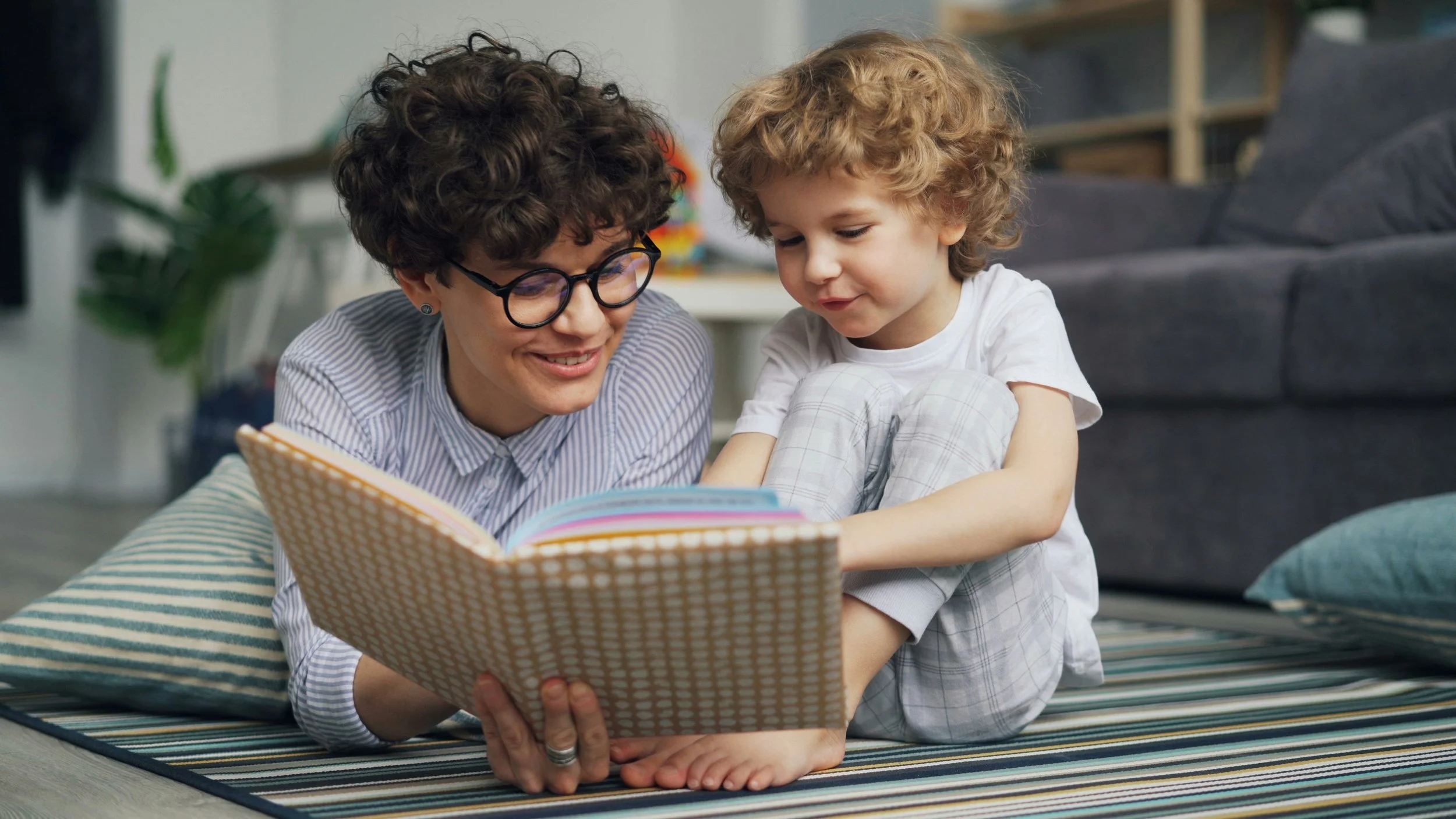
You're three pages into a board book and your baby has already chewed the corner, grabbed for the pages, and squirmed halfway off your lap. You wonder if any of this is actually sinking in, or if you're just talking to yourself while a very small person tries to eat “Goodnight Moon.” Take heart: reading to babies and toddlers is doing far more than it looks like in the moment, and you don't need a squirm-free audience for it to count.
What's Actually Happening When You Read to Your Child
Even before your baby understands a single word, reading aloud is building the neural pathways that language and early literacy depend on. Every time you read, your child hears the rhythm, tone, and structure of language, exposure that steadily grows their vocabulary long before they can talk. Researchers call the back-and-forth of you reading, your baby babbling or pointing, and you responding “serve and return.” That exchange is one of the most powerful things you can do for early brain development, and a book is simply a wonderful excuse to keep it going.
Reading together also builds attachment. The closeness of a lap, a familiar voice, and shared attention on a page tells your child's nervous system that they are safe and connected. That sense of security is itself part of early literacy development. Children learn best from people who make them feel secure, and books are one of the easiest ways to create that feeling every single day.
The Common Mistake: Waiting Until They're “Ready”
Many parents assume reading aloud should wait until a baby can sit still, follow a plot, or understand the words. In reality, the earlier you start, the better, even from the newborn days. Your baby doesn't need to comprehend the story for the benefits to take hold. What matters most is your voice, your presence, and the repetition of the experience over time.
It also helps to release the expectation of finishing every book cover to cover. A one-year-old who flips to their favorite page and shuts the book is still engaging with language and print. That counts.
What Genuinely Helps: Simple Ways to Start Today
• Keep board books within reach. Baskets on the floor or a low shelf let your child choose a book the same way they'd choose a toy, which builds independence and interest.
• Narrate your day. Describing what you're doing while you cook, fold laundry, or drive builds vocabulary even without a book in hand.
• Follow your child's lead. If they want the same book fourteen times in a row, that repetition is exactly how new words and patterns get locked in.
• Make it a rhythm, not a task. A few minutes before naptime or bedtime, done consistently, matters far more than a long session done occasionally.
When to Start and What It Looks Like at Daycare
There is no wrong age to begin reading aloud to a child, including the earliest infant days. At The Pointe Christian Academy, our infant and toddler rooms include daily read-aloud time, cozy book corners, and caregivers trained to make story time interactive rather than passive. We've also written before about language milestones parents can watch for, which pairs well with the reading habits you build at home.
We believe every child was made with a mind worth filling with wonder, story, and truth. Long before Scripture became words on a page for us, it was a voice, a story passed down and read aloud within families and communities. Reading to your child each day is a small, faithful echo of that same gift: handing down language, story, and love, one page at a time.
Reading aloud to your baby or toddler will not always look like the picture in your head, and that is completely fine. Some days it will be three pages and a chewed corner. Other days it will be the same book, again, for the fourteenth time. Both are building something real. Keep going. You are giving your child a gift that will shape how they think, speak, and connect for the rest of their life.
If you'd like to see how reading and early literacy come to life in our classrooms, we'd love to show you around. Schedule a free tour at thepointechristian.academy and meet the teachers who make story time a daily highlight.
Written by Dr. David Lombard, Child Psychologist and Executive Pastor for The Pointe Church. David has worked with children and parents for over twenty-five years and is passionate about helping families navigate the beautiful chaos of the early years. David is also a father to eight children and is raising his granddaughter, which means he has lived through most of what he writes about.